
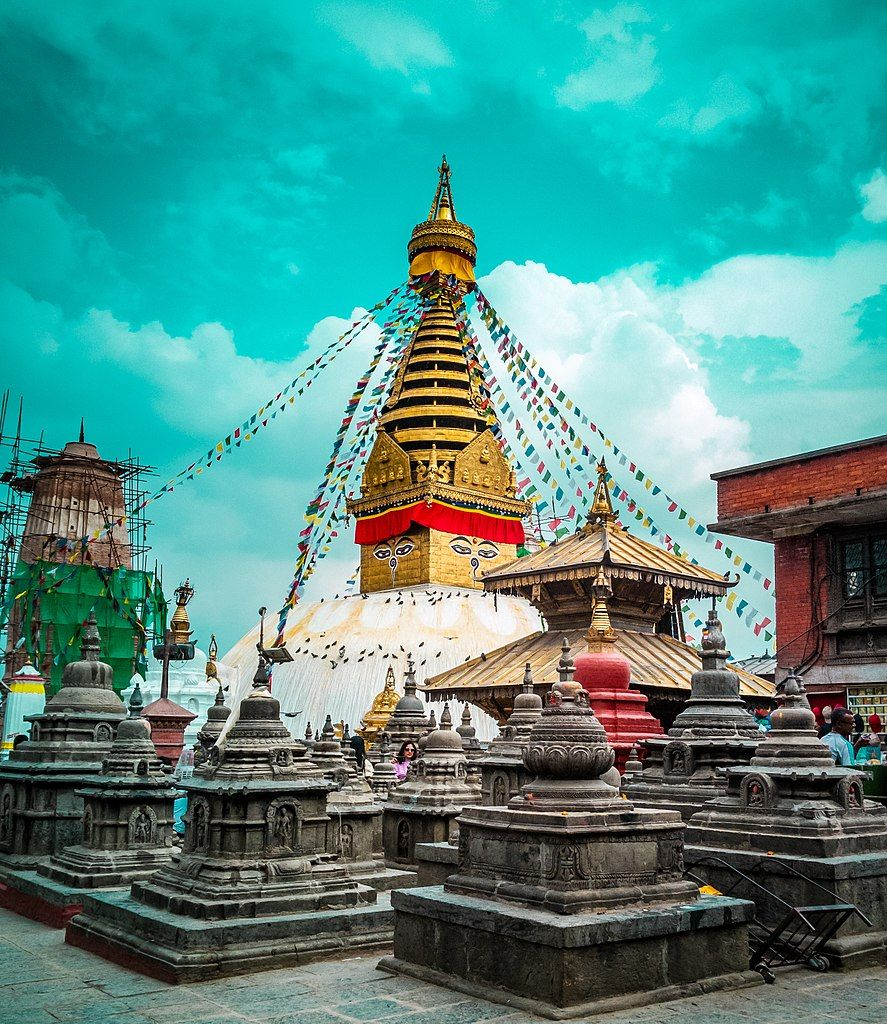

A long flight of stone steps leads towards Swayambhu. Above it, the great stupa looks out over Kathmandu. Before reaching the top, you have a simple choice: keep climbing or pause for a breath.
Take the pause. There is no prize for rushing through a place like this.
Swayambhu Mahachaitya Temple, also known as Swayambhunath, stands on a hill west of Kathmandu. Many travellers know it as the Monkey Temple. Yet that familiar nickname tells only a small part of its story. This is a sacred Buddhist site where Hindu worship also has a place.
To understand its appeal, leave room for more than a photograph. Look at the buildings, learn a little of their history, and give people space to pray.
What Is Swayambhu Mahachaitya?
Although visitors often call it a temple, the main monument is a Buddhist stupa. Its broad white dome supports a gilded upper structure bearing the eyes of the Buddha.
The shape is striking, even from a distance. Up close, however, it helps to look beyond the main dome. Swayambhu belongs to a much larger cultural landscape.
UNESCO includes it among the seven monument zones of the Kathmandu Valley World Heritage property. The valley received World Heritage status in 1979. UNESCO also identifies Swayambhu’s stupa as the valley’s oldest Buddhist monument.
That history gives the site depth. You are visiting a place whose importance reaches far beyond modern tourism.
The Lotus Legend
Swayambhu’s origin story begins with water.
According to local religious tradition, a great lake once filled the Kathmandu Valley. A lotus bloomed in that lake, and the sacred origin of Swayambhu connects with that flower.
Kathmandu Metropolitan City records a version involving Vipaswi Buddha, who planted a lotus seed in the lake. The flower later appeared with rays of coloured light.
This is a sacred legend, rather than a documented account of the stupa’s construction. Even so, it matters. Such stories explain how people understand a place and why they hold it dear.
Knowing the story changes the way you approach the hill. The monument becomes part of a much wider story about the valley itself.
The Climb to the Stupa
The steep stairway makes the approach memorable, but it can also be tiring. Wear comfortable shoes and climb at a pace that suits you.
There is another option. The Nepal Tourism Board notes that a road reaches close to the top, leaving a shorter walk. If stairs are difficult, ask about this approach when arranging transport.
Do not feel that you must take the longest route to have a meaningful visit. Arriving with enough energy to explore is more useful than reaching the top exhausted.
Carry some water, keep your bag light, and leave enough time for breaks.
Look Beyond the Main Monument
It is easy to arrive with one picture in mind: the white dome and the Buddha’s eyes.
Once you have seen it, look more closely at the surrounding complex. The Nepal Tourism Board highlights its smaller shrines, monasteries, prayer wheels, and the temple dedicated to Harati.
Harati is associated with the protection of children. Her shrine offers another thread to follow when learning about the site.
A local guide can help explain details that a quick visit might miss. Ask about one carving or one shrine that catches your attention. A focused question can lead to a more interesting conversation than a list of dates.
You do not need to remember every name. Understanding a few details is enough to make the visit richer.
A Place of Shared Faith
One of Swayambhu’s most important qualities is the presence of both Buddhist and Hindu traditions.
This connection belongs to the wider history of the Kathmandu Valley. UNESCO describes how these faiths helped shape its art, buildings, and cultural life over centuries. It also recognises the skilled work of Newar craftspeople in the valley’s heritage.
For visitors, that offers a reason to look with care. A shrine may have meanings that are not obvious from its appearance.
Rather than guessing, ask. And when someone is worshipping, allow them privacy.
The site may be part of your holiday, but it holds a different place in someone else’s daily life.
Leave Time for the View
The hill offers a broad view across Kathmandu. After exploring the complex, pause to take in the city below.
Try putting your phone away for a few minutes. Look at the spread of buildings and the shape of the valley.
There is no need to turn the moment into a grand lesson. Sometimes, enjoying a view is enough.
Nor should you expect every part of the visit to feel quiet or deeply spiritual. Your experience may be shaped by crowds, weather, or simply how tired you feel. Let the place be itself.
Visiting With Care
A thoughtful visit requires a few simple habits.
Dress respectfully and follow signs at individual shrines. Ask before photographing people, especially during prayer. Keep paths clear when stopping for pictures.
Around monkeys, keep food packed away and give the animals space. Do not feed them or try to draw them closer for a photograph.
Check current entry charges and access details before setting out. Old travel posts can be useful for ideas, but practical information may change.
Most of all, avoid packing the visit into a tiny gap between other stops. Leave enough time to look, rest, and ask questions.
A Final Thought
Swayambhu Mahachaitya Temple deserves more than a quick climb and a photograph from the top.
Its appeal lies in the details: the form of the stupa, the stories linked to the hill, and the faith people bring there.
Go with curiosity. Learn what you can, respect what you do not yet understand, and resist the urge to hurry.
The view may bring you up the hill. What you discover along the way can make the visit worth remembering.